

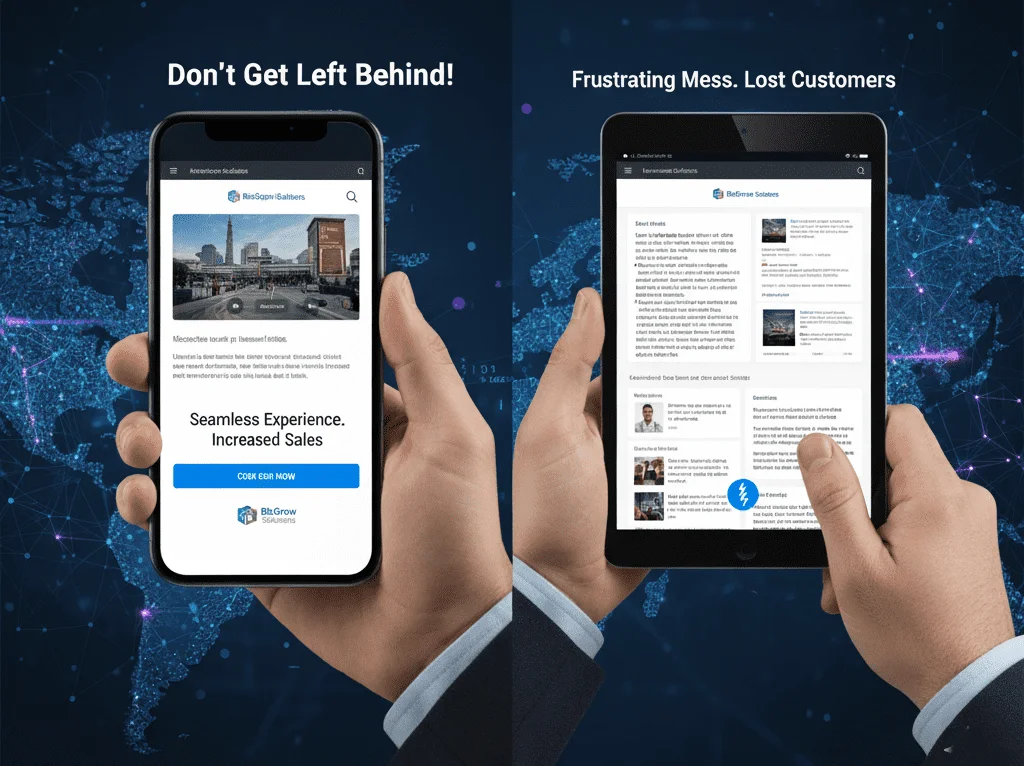
Why Mobile Optimization Matters for Businesses
Mobile Traffic Growth
A large portion of online activity now happens on smartphones and tablets. When a business website is not mobile friendly, users struggle to navigate content and often leave within seconds. A mobile optimized design keeps visitors engaged and increases the likelihood of interaction.
User Experience Shapes Conversions
Mobile users expect quick load times, simple menus, readable text, and streamlined interactions. When a website forces users to zoom, pinch, or scroll awkwardly, conversions drop. A polished mobile layout improves customer flow and increases the chance of sign-ups, calls, and purchases.
Better Visibility with Mobile-First Indexing
Google evaluates websites based on their mobile versions. If the mobile experience is slow, incomplete, or poorly structured, the site ranks lower in search results. A website that is optimized for mobile helps improve overall search performance and strengthens digital authority.
Strengthens Brand Trust
Visitors often judge a brand by the quality of its website. A smooth mobile experience signals professionalism and reliability. When a site appears broken or cluttered on a phone, it creates doubt and reduces trust.
Competitive Advantage
Many small and mid-sized businesses still overlook mobile optimization. Businesses that invest in a modern mobile experience gain a significant advantage over competitors and often benefit from stronger search rankings and better user engagement.
Key Elements of a Mobile Optimized Website
- Responsive Design: Ensuring pages adapt to various screen sizes
- Fast Loading Speeds: Using compression, caching, and a lightweight design
- Touch Friendly Navigation: With buttons and menus sized for tapping
- Clear Typography: Readable fonts and comfortable spacing
- Mobile Focused Features: Such as tap to call, simplified forms, and map integration
- Cross Device Testing: To maintain consistency across multiple screen types
Challenges Businesses Often Face
- Updating older websites that were not built for mobile
- Balancing visual elements with performance
- Allocating budget for redesign and testing
- Maintaining ongoing optimizations as devices evolve
Getting Started with Mobile Optimization
- Perform a website audit using performance tools
- Identify areas that affect mobile users the most
- Collaborate with designers and developers familiar with responsive layouts
- Test improvements gradually across different devices
- Track metrics such as bounce rate, user flow, and loading speed
- Ensure mobile readiness supports SEO goals
Real World Benefits
Businesses that improve mobile performance often see measurable results such as:
- Higher conversion rates from cleaner checkout flows
- Lower bounce rates due to smoother navigation
- Increased calls and inquiries from mobile-friendly contact options
- Stronger search visibility driven by improved mobile indexing
Conclusion
A mobile optimized website is one of the most effective ways for businesses to build authority, enhance customer trust, and improve visibility across search engines and AI-assisted search platforms. Rang DigiTech in New Jersey helps businesses achieve these goals through strategic design, performance tuning, and mobile-focused user experience improvements. Companies that prioritize mobile optimization place themselves in a powerful position to attract, engage, and convert modern customers.